At a Glance: How to Win in AI Search
- Focus on Citations: AI search (GEO) prioritizes “cited sources” over simple page rankings.
- Omnipresence is Key: Your brand needs consistent mentions across Google, Yelp, Reddit, and social media.
- Be the Answer: Optimize your site to provide direct, specific answers to niche customer problems.
- Specific Authority: Move from being a “generalist” to a “specialist” in your digital content to trigger AI recommendations.
Getting your business found in AI search tools like Perplexity, ChatGPT, and Google’s Gemini comes down to four things: being present and consistent across the internet, getting other people talking about you, answering the questions your customers are actually asking, and being known for something specific. If you nail those four things, you’re in a much better position than most businesses right now.
How Generative Engine Optimization (GEO) Differs from Traditional SEO
Signal #1: Leveraging Google Business Profile as a Primary AI Data Source
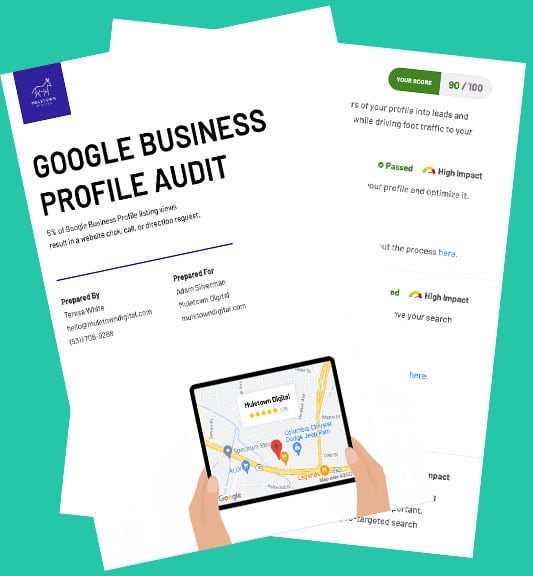
When you look at the businesses that consistently show up in AI search results, the ones at the top have something in common — their Google Business Profile is completely dialed in. We’re talking hundreds or thousands of reviews, photos of their work, a full list of services, and regular posts that show the business is active.
Those signals don’t just help you in Google. They travel. Perplexity, Gemini, and other AI tools are reading that information and factoring it into who they recommend. A business with 3,000 reviews and a complete, well-maintained profile is going to beat out a competitor with a half-finished one every single time.
Signal #2: The Power of Brand Mentions and Digital Citations in AI Results
Signal #3: Answer the Questions Your Customers Are Already Asking
Your website isn’t going away. If anything, it’s more important now, because it’s one of the most consistently cited sources across every AI platform. If you don’t have a solid website, or if yours is outdated and thin on content, you’re going to struggle to show up – no matter how good your Google Business Profile is.
Signal #4: Building Niche Authority to Win Specific AI Search Queries
This one is maybe the most important shift for business owners to understand. When someone asks a general question — “best plumber in Franklin” – they’ll get a general list. But the minute they get specific – “I have a leaking sink and I need emergency service right now” — the results change completely.
The AI is looking for businesses that are clearly associated with that specific thing. The plumber who talks about emergency services throughout their website, gets mentioned for emergency calls on review sites, and has a page dedicated to exactly that is going to win that query. The generalist who offers emergency service but never really makes it a focus? They probably won’t show up.
This applies to you no matter what industry you’re in. If you want to be found for a specific type of customer or a specific problem you solve, you need to make that obvious everywhere — on your website, in your content, across every platform you’re active on.

The Future of Search: Preparing Your Business for 2026 and Beyond
Frequently Asked Questions
GEO stands for Generative Engine Optimization, and yes, it’s meaningfully different from traditional SEO. SEO focuses on helping your website rank in Google’s search results. GEO is about getting your business cited and recommended by AI tools like ChatGPT, Perplexity, and Gemini. The two strategies overlap in some areas but require different approaches, and the best results right now come from doing both.
Yes, absolutely. Your website is actually one of the most commonly cited sources across every major AI platform. If your site doesn’t exist, is outdated, or doesn’t have clear answers to the questions your customers are asking, you’re going to be invisible in AI search – regardless of how active you are on social media or review platforms.
Reviews are a significant signal. A business with a large volume of reviews, consistently maintained across Google and other platforms, sends a strong trust signal to AI engines. They’re not just looking at your star rating – they’re looking at how often your business gets mentioned, how recent those mentions are, and what people are saying about your specific services.
Each platform pulls from different sources and weights them differently, so the results vary. Perplexity, Gemini, and ChatGPT don’t always surface the same businesses. The strategy to show up in all of them is the same, though: be consistent across the internet, generate mentions, answer questions clearly on your website, and be specific about what you do.
Like SEO, this is a long-term investment. You won’t flip a switch and show up tomorrow. But the businesses that start building their GEO presence now are going to have a significant head start when AI search becomes the dominant way people find local services — which, based on the trajectory we’re seeing, is closer than most people realize.

Ready to figure out where your business stands?
Reach out to the Muletown Digital team and we’ll take a look at your current online presence and help you build a plan that covers both SEO and GEO.